Legit does not mean easy
Reward apps sit between two extremes. At one end are real platforms that pay for completed offers, usually slowly and with conditions. At the other are apps that exist to collect your time, data or money and never pay. The first kind can still disappoint you if your expectations are wrong, so a useful test of legitimacy is whether the app is honest about how hard the rewards are.
Start there. If an app promises fast money, guaranteed income or a typical monthly figure, treat that as a warning in itself. Real platforms cannot promise outcomes that depend on offers, deadlines and third-party confirmation.
There is also a quieter category of unreliable apps, ones that do pay but make it practically impossible to reach the payout threshold. Check what a realistic first cash-out would require, in time as well as in coins, before you decide an app is worth your attention.
Check who runs it
A legitimate platform tells you who operates it. Look for a company name, a registered location, a contact address and published terms and privacy policy. FastPlay, for example, is operated by KRIN AI LLC in Wyoming, United States, and says so in its legal pages.
A missing company name, a contact form that goes nowhere or terms that cannot be found are reasons to stop. It takes two minutes to check and is the cheapest protection you have.
The terms and privacy policy are worth skimming for a few specific things: what data is collected, who it is shared with, how account closure works and what happens to your balance if you leave. Vague answers to those questions say as much as precise ones.
Never pay to earn
Be wary of any reward app that asks for a deposit, a membership fee or payment details before you can earn. Legitimate offers can ask you to make a purchase in a game, but that is a decision about the game, spelled out in the offer, and you can decline it.
Also watch for requests for things a rewards app does not need: your online banking login, a government ID at sign-up, or access to your messages. If you are asked for something unusual, stop and read why.
If you are ever asked to pay or to share a secret, the answer is no. A rewards platform never needs your passwords, your recovery codes or a payment to release money that is already yours. Anyone who says otherwise, including someone claiming to represent the platform in a message, is not to be trusted.
Look for evidence of payouts
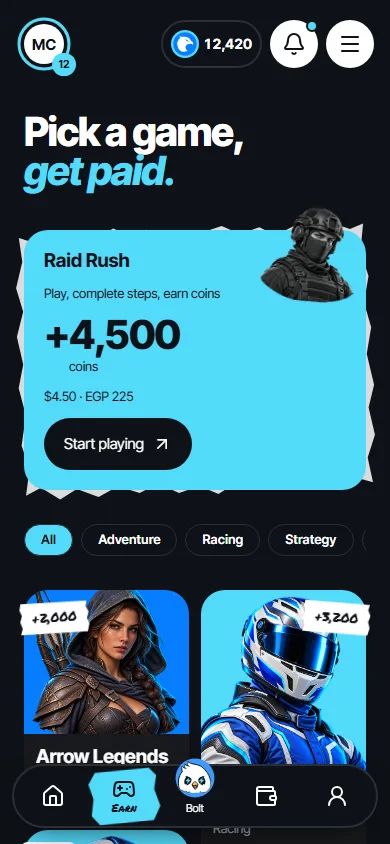
Claims are cheap. Evidence is harder to fake in bulk. Look for real, specific records of completed payouts, an explanation of how rewards are confirmed and independent reviews you can read in more than one place. FastPlay publishes a cash-out proof page, but no single page should settle the question for you, so compare it with outside opinions.
Read negative reviews as carefully as positive ones. The useful ones describe a specific offer, date and outcome. Complaints that a reward was pending usually mean the player did not know that pending is not paid.
Look at dates as well. A page of reviews that all appeared in a week, or payout screenshots with no detail, can be produced cheaply. Specific, varied accounts spread over months are harder to fake and more informative.
Understand how the money actually flows
A trustworthy explanation names the source. Offers come from advertisers or networks, the provider reports activity, and the platform confirms it before a reward is settled. If an app cannot explain who is paying and why, be careful.
Also check that the cash-out options are plausible for your country and that conditions such as minimums and review steps are written down before you start. Available methods vary by country, and an app that claims to pay everyone everywhere is simplifying.
A good platform is comfortable saying what it does not control. For example, it should be clear that the game provider reports your activity and that the platform confirms it. If an explanation makes everything sound automatic and certain, it is probably leaving something out.
A short checklist
Before you start: find the company and its legal pages, confirm there is no upfront fee, read how rewards are confirmed, look for real payout evidence and outside reviews, and check that the age limit is stated. FastPlay is 18 and over.
Then start small. Do one offer, watch the status, and see what reaches you. If the app behaves as described, you have learned more than any review could tell you. If it does not, you have lost an evening, not savings. For the full journey, the how it works page is a good place to compare claims with reality.
Do not rely on one test only. Come back after a few weeks and see whether the support responses, the offers and the terms still look the way they did on day one. Legit is not a one-time label, it is a pattern you can watch.
Finally, trust your own judgement about how an app makes you feel. If it rushes you, flatters you or hides the conditions until you have committed, that is a signal, whatever the reviews say. A platform worth using will be happy for you to read slowly, take your time and leave if it is not a fit. That is the standard we try to meet at FastPlay, and it is the one to hold every app to.
None of these checks is complicated, and together they take about ten minutes. That is a small price compared with weeks spent on an app that was never going to pay.